Story
What Lawdex is, in plain words
No jargon. Just a clear look at what Lawdex does for a law firm, why it exists, and what changes on the day you start using it.
· 2 min read
If you run or work in a law firm in Nigeria, your day is held together by memory, WhatsApp, a physical diary, and a lot of trust that nothing important slips through. Lawdex exists to take that weight off your shoulders. This post explains, in the simplest terms, what it actually is.
The one-sentence version
Lawdex is one secure place where your firm keeps its matters, court dates, tasks, documents, money, and team conversations — so nothing lives only in someone's head or someone's phone.
That is the whole idea. Everything a firm needs to run, in one place, working together, instead of scattered across notebooks, spreadsheets, folders, and chat apps that were never built for legal work.
What that looks like day to day
Instead of describing features, here is what changes once a firm is on Lawdex:
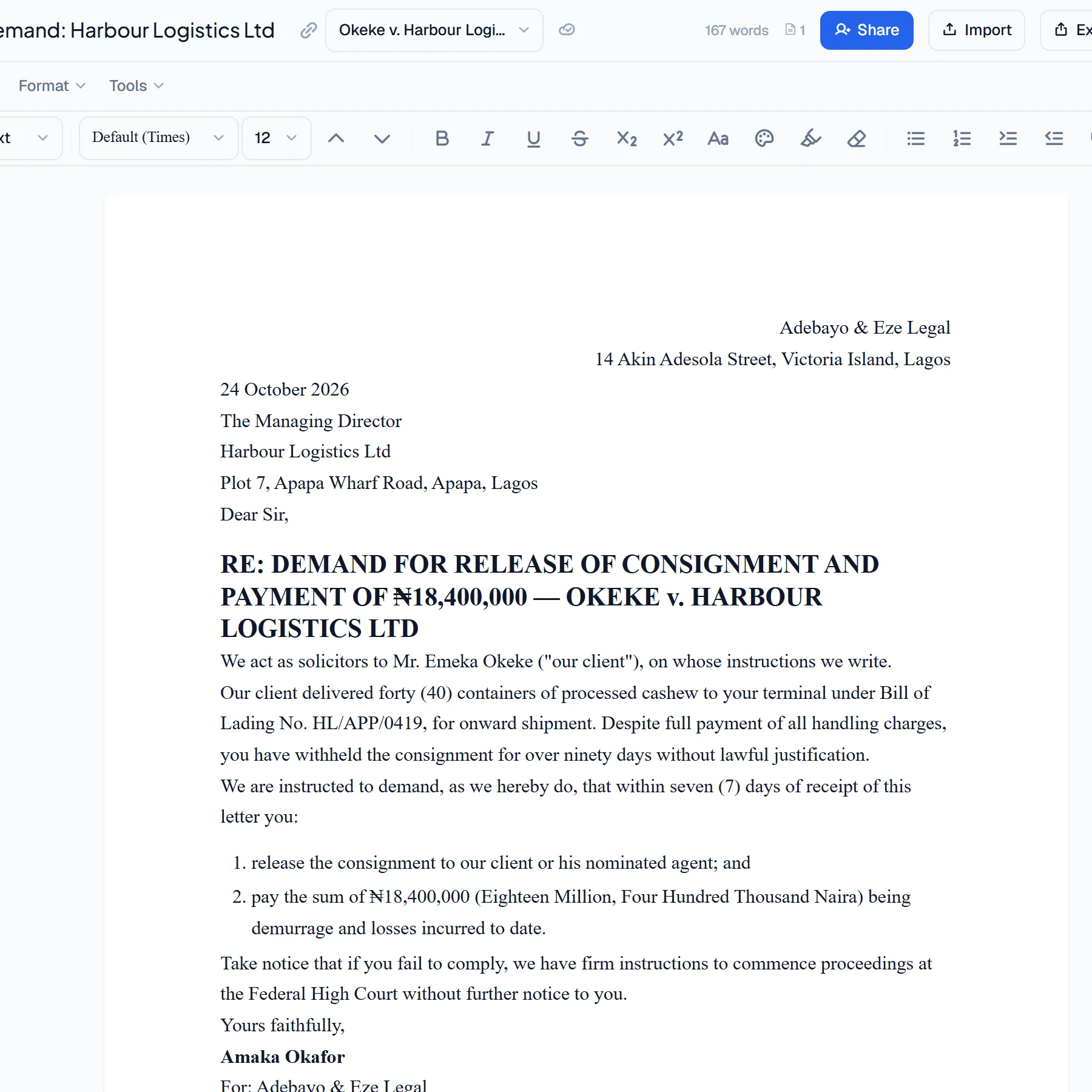
- Every case has one file. Open a matter and you see its parties, court, the next hearing, the tasks attached to it, and its documents — not five different places to check.
- The court diary remembers for you. Hearings and deadlines show up in one calendar, and reminders go out before the date, so a missed adjournment stops being a risk.
- Work is assigned, not just mentioned. A task has an owner and a deadline, so 'I thought you were handling it' becomes a thing of the past.
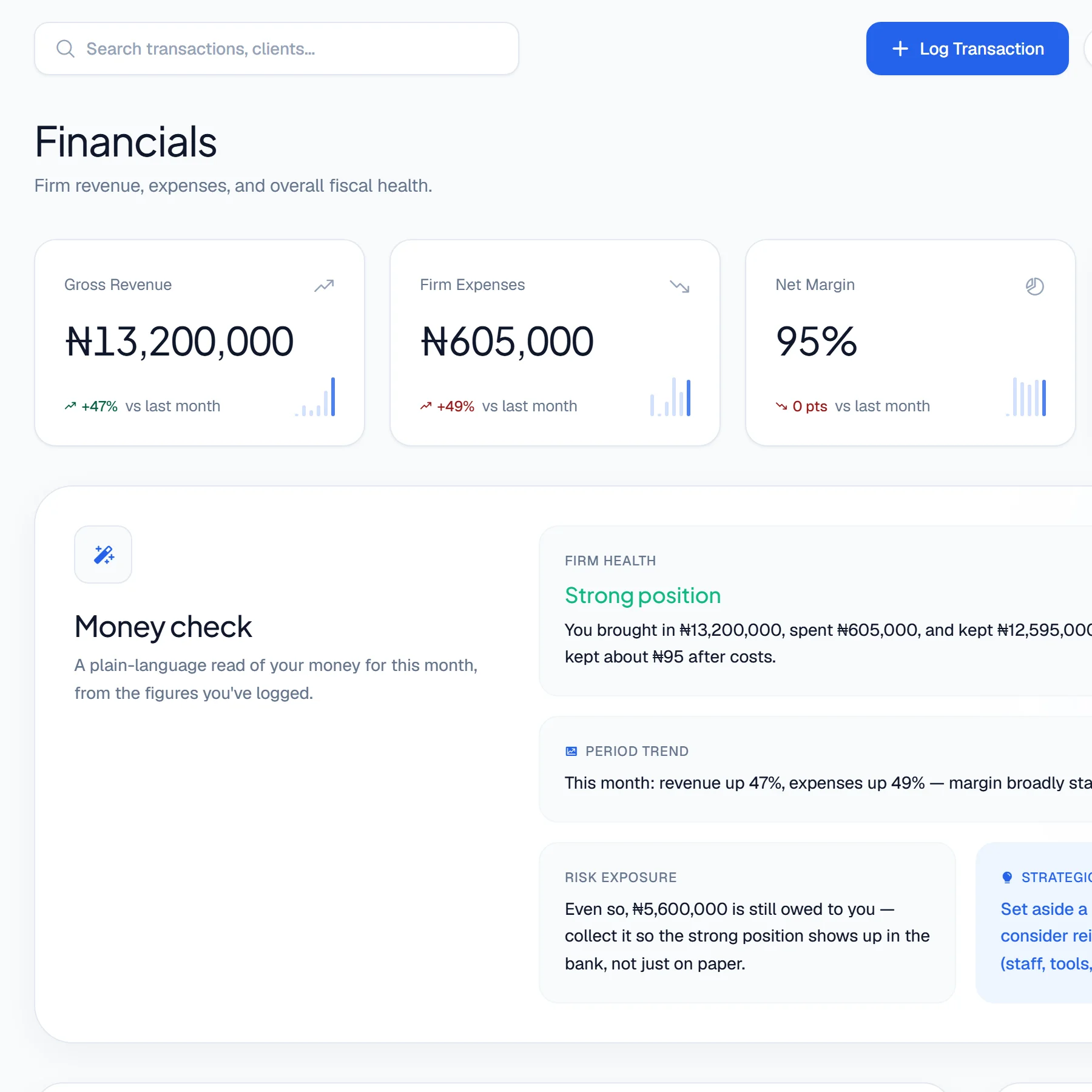
- Money is visible. Fees billed, payments received, and what is still owed are tracked as you go, not reconstructed at month end.
- The team talks in context. Messaging lives beside the work, so a question about a matter is attached to that matter.
Who it is for
Lawdex is built for Nigerian law firms and chambers — from a solo practitioner who wants to stop dropping court dates, to a growing firm where partners, associates, secretaries and heads of chambers each need to see the right slice of the work.
Everyone gets a view that fits their role. A lawyer sees the matters and tasks they are responsible for. A partner or head of chambers sees the whole practice. A secretary keeps the diary and files moving. Nobody sees more than they should, and nobody has to dig for what they need.
Why we built it
Legal work is unforgiving about detail. A single missed date can cost a client their case and a firm its reputation. Yet most firms manage that risk with tools built for something else entirely. We thought practitioners deserved software that understands how a law firm actually works — court diaries, adjournments, matters, fees, chambers hierarchy — rather than being forced to bend a generic app to fit.
The goal is simple: let lawyers spend their attention on the law, not on chasing where things are.
What it is not
Lawdex is not a replacement for your judgment, and it does not practise law for you. It will not file for you or decide strategy. What it does is remove the busywork and the anxiety of keeping everything straight, so your judgment has room to work.
It is also not a leap of faith. Your data is yours, isolated from every other firm, and you can export it whenever you like. Starting takes about ten minutes, and you can bring your team in as you go.
Where to start
Create your firm, add your first matter, put your next court date in the diary, and invite one colleague. Within a day you will feel the difference: the mental load of remembering everything moves out of your head and into a system built to hold it.
The Lawdex team
Building practice management for lawyers, chambers and firms.