Product
AI that helps, without cutting corners
Lawdex has AI tools — a summariser, a document generator, and a searchable law library. Here is what they do, in plain terms, and the care we take so they help your judgment instead of replacing it.
· 2 min read
There is a lot of noise about AI and the law right now, much of it either breathless or fearful. We want to be plain about what Lawdex's AI tools do, what they do not do, and why we built them the way we did.
The principle first
AI in Lawdex is there to save you time on the mechanical parts of the work — reading long documents, producing first drafts, finding the right provision — so your attention goes to the parts that need a lawyer: judgment, strategy, and responsibility for the final work. It assists; it does not decide.
A draft is a starting point, not a filing. The tool does the typing; the lawyer does the lawyering.
The summariser
Long documents are part of the job, but reading every one end to end to find the point is a poor use of a lawyer's hours. The summariser reads a document and gives you a clear, plain summary of what it contains, so you can grasp the shape of it quickly and then read closely where it matters.
It does not replace your reading of the crucial passages. It gets you to them faster.
The document generator
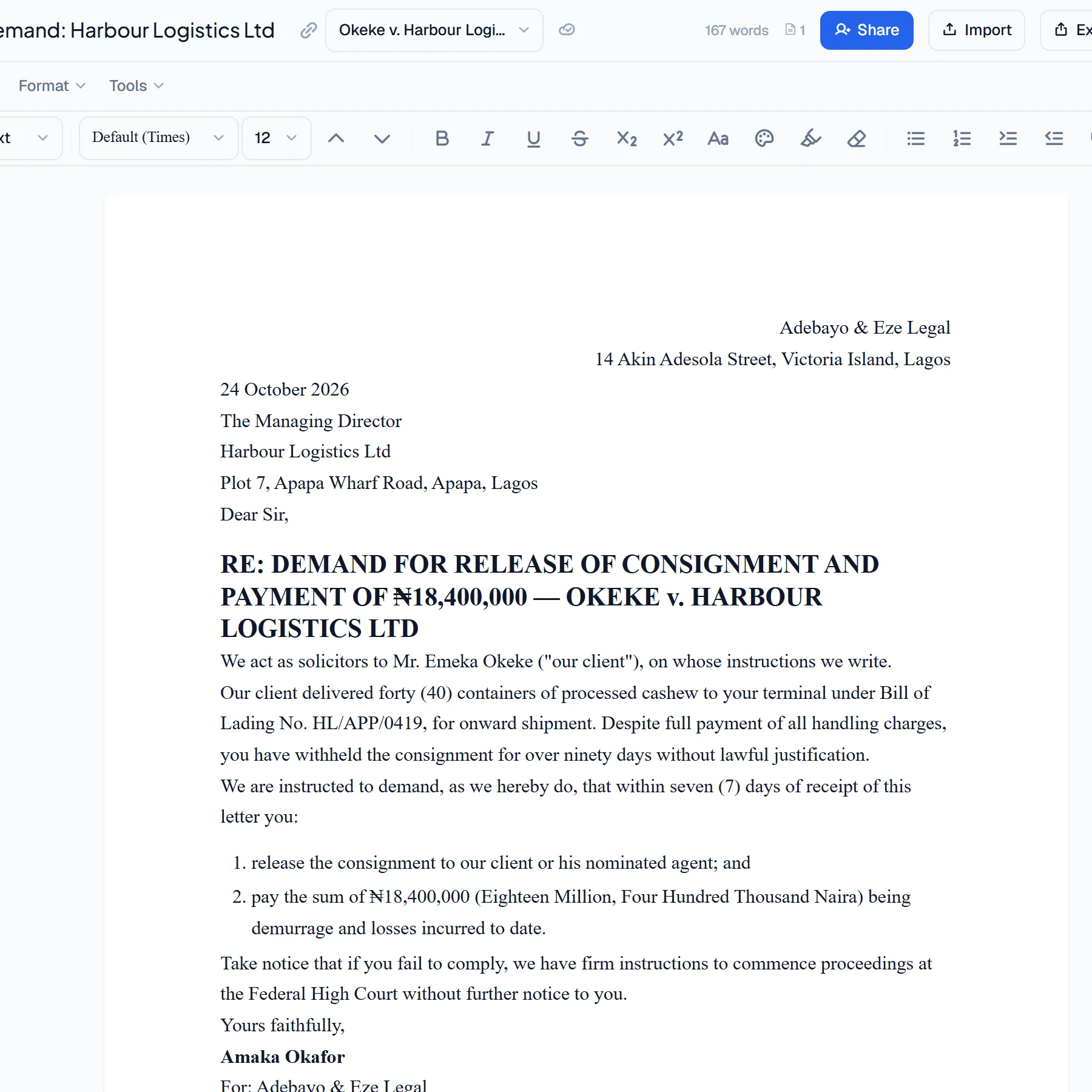
Starting a draft from a blank page is slow. The document generator takes a firm-approved template and the facts of your matter and produces a complete first draft you can then settle and finalise. It fills the template with your facts and adapts standard clauses to fit.
Crucially, it is built not to invent. It will not fabricate a statute, a section number, or a case citation. Where a detail is missing, it leaves a clearly marked placeholder for you to fill, rather than making something up. The draft is always yours to review, correct, and take responsibility for.
The law library
Lawdex keeps a curated, human-verified reference of Nigerian statutes and rules of court that you can read and search inside the app. Every instrument shows its source and the date it was last reviewed, so you always know what you are relying on and can confirm it against the official gazette.
You can search across the whole library for a phrase and jump straight to the provision, instead of leafing through a PDF.
The care underneath
Responsible AI is as much about restraint as capability. A few of the choices we made:
- Your firm's data stays your firm's. The AI works on your material for you; it is not a doorway for others to see it.
- The tools are honest about limits — a draft is labelled a draft, a summary points you back to the source, and the library tells you when it was last checked.
- There are sensible usage limits so the tools stay a helpful assistant rather than a runaway cost or a crutch.
The bottom line
Used well, these tools give you back hours every week and take the drudgery out of drafting and reading. Used carelessly, any AI can mislead. We built Lawdex's tools to make the careful path the easy one — helpful by default, honest about what they are, and always leaving the final word to you.
The Lawdex team
Building practice management for lawyers, chambers and firms.